

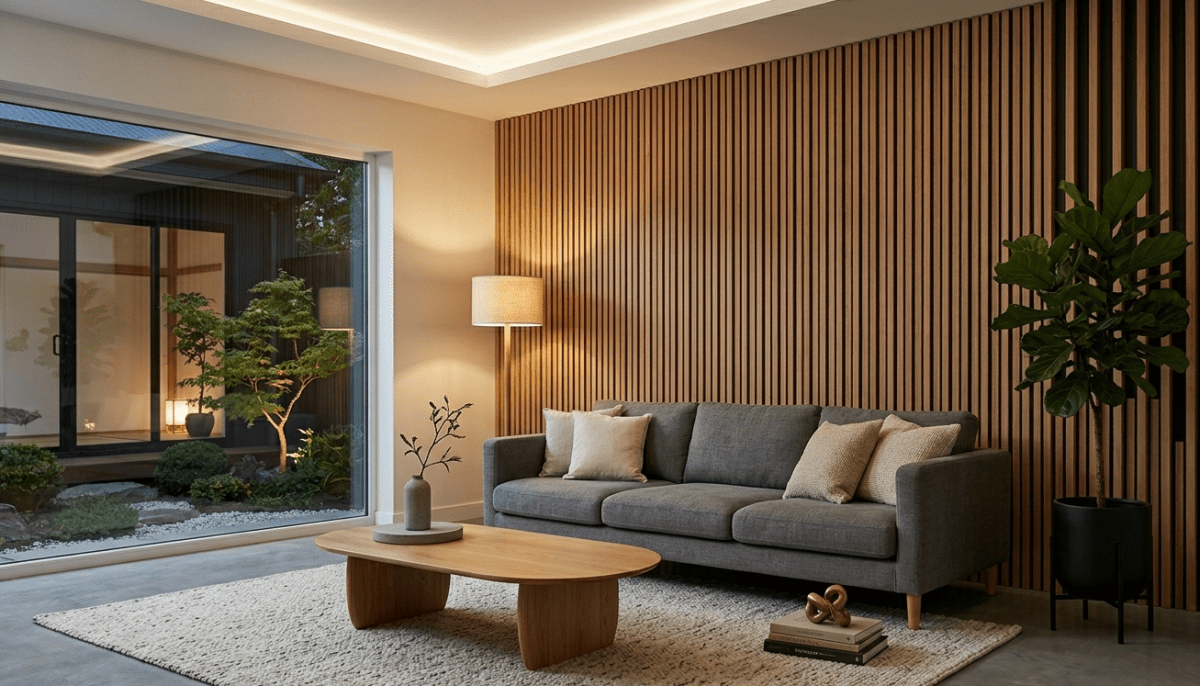
Wall panels have quickly become one of the most popular ways to transform interiors without a full renovation. From modern feature walls to waterproof bathroom solutions, they offer both style and practicality. Yet, despite their growing popularity, many questions still come up.
To answer common questions about wall panels, including how to install them, whether they’re waterproof, if they can be painted, and if they’re better than tiles, we’ve put together this simple guide.
Here you'll find everything you need to know about wall panels while helping you make confident decisions for your home.
What are wall panels?
Wall panels are boards or sheets used to cover walls for decorative or functional purposes. They come in materials like MDF, PVC, wood, laminate, and composite, and are used to improve both the look and durability of a space.
Some panels are purely decorative, while others are designed for moisture resistance or sound control.
Are wall panels in style?
Yes, wall paneling is very much in style right now. Modern designs like vertical slat panels, fluted textures, and clean feature walls are widely used in contemporary homes.
Instead of looking outdated, today’s paneling adds depth, texture, and a high-end finish to interiors.
Are wall panels better than tiles?
Wall panels can be a great alternative to tiles, especially in bathrooms and kitchens. They are quicker to install, easier to clean, and don’t require grout.
Tiles still offer more design variety, but panels are often the more practical and cost-effective option for many homeowners.
Can you install wall panels yourself?
Yes, wall panels are very DIY-friendly. Many homeowners choose to install them themselves using basic tools.
As long as you can measure accurately and follow instructions, installing wall panels can be a manageable project. For more complex areas like showers, professional installation may still be recommended.
How do you install wall panels?
Installing wall panels usually involves measuring your wall, cutting panels to size, applying adhesive or fixings, and securing them in place.
Some panels click together, while others are glued or screwed directly onto the wall.
Can you install wall panels over tiles?
Yes, in most cases you can install wall panels directly over tiles. The surface just needs to be clean, stable, and reasonably flat.
This makes panels a great option for quick bathroom upgrades without removing existing tiles.
Can you put wall panels on drywall or concrete?
Yes, wall panels can be installed on drywall, concrete, brick, and other surfaces. The method may vary depending on the material, but adhesive or mechanical fixings are commonly used.
How do you cut wall panels?
Cutting wall panels depends on the material. PVC panels can be cut with a utility knife or fine saw, while wood or MDF panels usually require a circular saw or jigsaw.
Accurate measurements are key to getting a clean finish.
Can you paint wall panels?
Yes, most wall panels can be painted. Wood and MDF panels take paint well when primed properly.
PVC panels can also be painted, but you’ll need the right primer and paint designed for plastic surfaces.
Are wall panels waterproof?
Some wall panels are waterproof, while others are not.
PVC and wet wall panels are fully waterproof and ideal for bathrooms and showers. Wood and MDF panels are not naturally waterproof unless sealed.
Can you use wall panels in a shower?
Yes, waterproof panels like PVC or acrylic are commonly used in showers. They are easy to clean, mold-resistant, and quicker to install than tiles.
Do acoustic wall panels work?
Yes, acoustic panels are designed to absorb sound and reduce echo within a room.
They don’t completely soundproof a space, but they significantly improve sound quality, especially in offices, studios, or home theatres.
Does wall paneling damage walls?
No, wall paneling does not damage walls when installed correctly. However, removing panels may require some minor repairs, such as patching or repainting.
How much do wall panels cost?
The cost of wall panels varies depending on the material and quality.
PVC panels are generally more affordable, while wood and designer panels can be more expensive. Installation costs are usually lower than tiling, which makes panels a cost-effective option overall.
Does wall paneling add value to a house?
Yes, wall paneling can increase the visual appeal of a home and add perceived value, especially when used as a feature wall or in key areas like living rooms and bedrooms.
Where can you buy wall panels?
Wall panels are widely available from hardware stores, home improvement retailers, and specialist suppliers.
It’s important to choose the right type based on where you plan to install them, especially for wet areas.
Wall panels are a simple yet powerful way to upgrade your home. Whether you’re looking to create a feature wall, improve a bathroom, or enhance acoustics, they offer flexibility, style, and practicality.
By understanding how they work, how to install them, and what materials to choose, you can make the right decision for your space.
Whether you’re doing a DIY project or hiring a professional, wall panels make it easier than ever to achieve a modern, polished look.


