

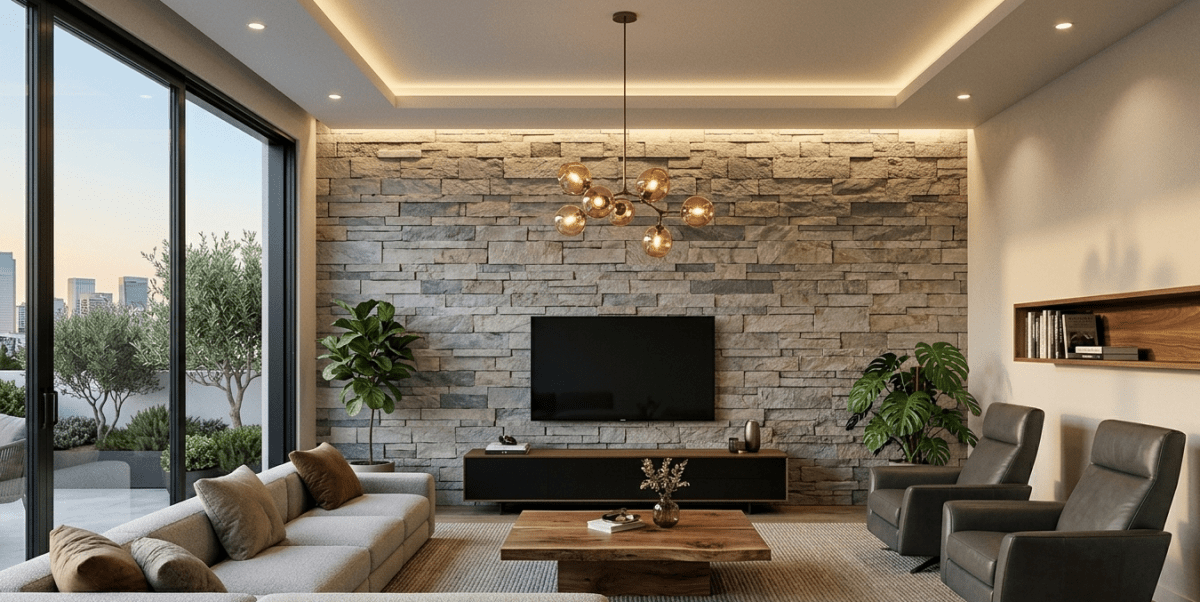
Introduction
Thin stone veneer panels are the ideal solution for homeowners, designers, and architects looking to add the natural beauty of stone to interior and exterior spaces without the structural challenges of traditional masonry. These panels are precision-cut slices of natural or engineered stone, ranging from 10–30 mm in thickness, providing authentic stone aesthetics at a fraction of the weight.
Whether for a feature wall, fireplace surround, residential façade, or commercial lobby, thin stone veneer panels offer design flexibility, durability, and ease of installation. Lightweight and versatile, they can be applied directly to existing walls using adhesive or mechanical fixings, reducing costs and construction time.
For more information on material specifications and design inspiration, check out Houzz – Wall Cladding Ideas.
What Are Thin Stone Veneer Panels?
Thin stone veneer panels are slices of natural or engineered stone, designed to replicate the look of full-depth stone at a fraction of the weight. Unlike traditional masonry, they do not require reinforced footings, making them ideal for interior and exterior applications.
Definition and Materials
Produced from natural stones such as slate, quartzite, limestone, basalt, sandstone, and travertine, or engineered composites combining natural aggregate with resins or cement binders, thin stone panels cater to a wide range of aesthetic and functional requirements.
- Natural stone panels: offer unique color, pattern, and texture
- Engineered panels: provide uniformity and consistency for large-scale projects
How They Differ from Traditional Stone
| Feature | Traditional Stone | Thin Stone Veneer Panels |
|---|---|---|
| Weight | 80–150 kg/m² | 15–35 kg/m² |
| Installation | Requires mortar bed and skilled masons | Adhesive-fixed, fast installation |
| Cost | High total project cost | Lower due to reduced weight & labor |
| Versatility | Limited retrofitting | Can be applied to existing walls & partitions |
Types of Thin Stone Panels and Cladding
Thin Stone Wall Cladding
Thin stone wall cladding panels are applied to vertical surfaces to create the appearance of a natural stone wall.
- Split-face, smooth, brushed, or tumbled finishes
- Interior and exterior applications
- Standard sizes: 150×600 mm to 600×900 mm
Thin Stone Veneer Panels
Premium panels with mesh backing allow direct adhesive installation.
- Natural variation in color, pattern, and texture
- Stone types: slate, quartzite, limestone, basalt, travertine, sandstone
- Ideal for high-visibility areas in residential and commercial spaces
Feature Wall Cladding Panels
Large-format panels designed for accent walls behind beds, sofas, fireplaces, or in commercial lobbies.
- Dramatic visual impact
- Complementary corner and trim pieces available
- Available in natural stone and engineered composites
Decorative Wall Cladding
Covers both interior and exterior aesthetic-focused wall finishes:
- Interior: Easy to clean, adhesive-fixed, visually refined
- Exterior: Weather-resistant, frost-proof, UV-stable
Benefits of Thin Stone Veneer Panels
Keywords: thin stone veneer panels benefits, decorative wall cladding advantages
- Lightweight: Can be applied to standard walls without structural upgrades
- Quick Installation: Adhesive-fixed, single installer covers 10–15 m²/day
- Aesthetic Appeal: Authentic textures and surface relief
- Versatile Use: Suitable for interior and exterior walls
- Property Value: Adds visual authority and resale value
- Sustainable: Reduced quarry waste, reusable panels
Applications and Design Ideas
Residential Interiors
- Living rooms: Floor-to-ceiling stone feature walls
- Bedrooms: Headboard wall accents
- Fireplaces: Surrounds and chimney breasts
- Hallways: Entrance statement walls
Commercial & Hospitality Spaces
- Hotel lobbies, reception areas
- Restaurants, bars, and retail interiors
- Corporate offices and boardrooms
- Spas and wellness centres
Exterior Facades & Landscaping
- Residential façade upgrades
- Garden retaining walls
- Pool surrounds, outdoor kitchens, and BBQ areas
- Commercial building façades
- Landscape features like water surrounds
Choosing the Right Panels for Your Project
- Material Selection: Choose stone type based on environment, aesthetics, and maintenance
- Thickness & Finish: 10–15 mm interior; 20–30 mm exterior or high-traffic areas
- Durability: Check slip resistance, frost-proofing, and chemical resistance
- Interior vs Exterior: Verify manufacturer ratings
Installation & Maintenance Tips
Surface Preparation
- Structurally sound, clean, dry, and flat
- Prime porous surfaces before adhesive
Adhesive & Fixing Methods
- Standard polymer-modified tile adhesive for interiors
- Flexible adhesive for exterior panels
- Mechanical fixings for panels above 20 kg/m²
Cleaning & Maintenance
- Seal panels on installation
- Clean with neutral pH detergent
- Re-seal every 2–5 years
- Inspect grout joints annually
Frequently Asked Questions (FAQs)
- Difference between veneer panels and standard stone tiles
- Can veneer panels be used outdoors?
- Professional installation required?
- How to fix to plasterboard?
- Best stone for bathrooms
- Cost per square metre
Internal Linking Strategy
- Link to Interior vs Exterior Wall Cladding
- Link to Feature Wall Cladding Ideas
- Link to How to Install Thin Stone Veneer Panels
External Resources (DoFollow Links)
Call to Action
“Browse our full range of thin stone veneer panels today and request a free sample to elevate your interior or exterior design project.”

