

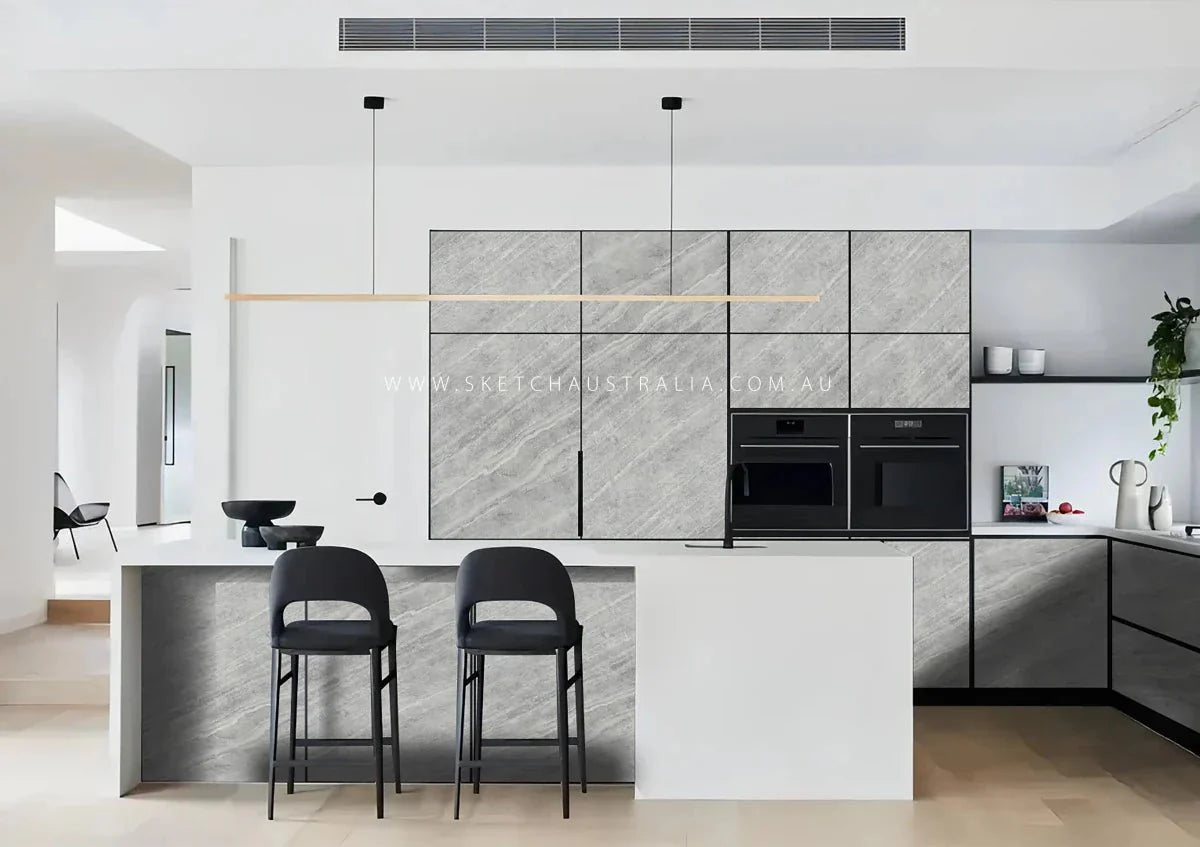

The living room feature wall is one of the highest impact design decisions you can make in an Australian home. A well executed feature wall transforms a room from a collection of furniture into a cohesive space with a genuine sense of character. Stone wall panels are particularly powerful in this role because they bring texture, depth, and a sense of permanence that paint and wallpaper cannot replicate.
At Sketch, we have supplied stone veneer panels for living room feature walls in homes from Melbourne to Darwin. Here are ten looks that work consistently well in Australian interiors.
1. Full Height Slate Behind the Television

The television wall is the most common location for a living room feature wall and full height slate panels are one of the best materials for this application. The strong vertical lines of split face slate draw the eye upward, making the room feel taller. Dark charcoal slate grounds the television within the wall rather than having it float on a painted surface. Pair with floating timber shelves and warm LED downlights for a complete look.
2. Marble Panel Feature Wall in a Coastal Home

For homes close to the water, white or cream marble wall panels create a connection between the interior and the coastal landscape outside. The soft veining of natural marble has an organic quality that suits relaxed coastal living. A marble feature wall behind a sofa in a light filled room with linen furnishings and natural timber floors creates exactly the kind of relaxed luxury that Australian coastal living is known for.
3. Warm Sandstone in a Queensland or Northern Territory Home

In tropical and subtropical Australian climates, warm sandstone panels bring the palette of the outdoor landscape into the living room. Honey and buff toned sandstone reads as calm and grounded in spaces flooded with natural light. This look is particularly strong with rattan and timber furniture, woven textiles, and abundant indoor plants.
4. Carbon Crystal Board Panels for a Home Theatre
If your living room doubles as a home theatre, Carbon Crystal Boards are a material worth serious consideration. These translucent panels have a crystalline depth that creates atmosphere even without backlighting. With a dedicated LED backlight system behind the panels, the effect in a darkened room is genuinely dramatic. Sketch supplies Carbon Crystal Boards in a range of tones from deep black to translucent amber.
5. Fireplace Surround in Stacked Slate
The fireplace has always been the traditional focal point of the living room and stacked slate panels are one of the most popular ways to give it presence. A full height slate surround from the mantle to the ceiling creates a strong vertical statement. The natural texture of slate handles the heat radiation from a fireplace without any risk of fading or discolouration over time.
6. Half Wall Panelling for a Period Home

In older Australian homes, half wall panelling in stone is a way to acknowledge the architectural history of the space while bringing contemporary texture. Stone panels to 1.2 or 1.5 metres on the lower section of the wall, with a painted wall above, creates a clear visual line that works well in rooms with high ceilings. Slate in rust tones works particularly well in Federation or Victorian era homes.
7. Translucent Stone Panel Room Divider
In open plan living spaces, a partial translucent stone panel divider allows light to flow between zones while creating visual separation. When backlit, translucent stone panels create a warm amber glow that adds atmosphere to an open plan space in the evening. This look is increasingly popular in contemporary Australian homes where open plan living is the norm but some spatial definition is still desired.
8. Textural Contrast With Smooth Furnishings
One of the most effective uses of stone feature wall panels is as a textural contrast to smooth contemporary furnishings. A rough split face slate wall behind a sleek leather sofa, polished concrete floors, and minimalist joinery creates a tension between rough and smooth that gives the room energy and sophistication. The stone becomes the dominant material in the room and everything else plays a supporting role.
9. Entry Feature Wall That Carries Through to the Living Room
Where the entry hall and living room are visible from each other, a stone feature wall that begins at the entry and continues into the living room creates a powerful sense of arrival and architectural continuity. This approach works best with a single stone type used consistently throughout, and it is one of the most effective ways to make a strong first impression when you open the front door.
10. Gallery Wall With Stone Background
A stone feature wall does not have to carry the room on its own. Some of the most interesting living rooms use stone as the backdrop for an art or photography gallery wall. The texture of natural stone behind framed artwork creates a layered, curated look that is more interesting than hanging work on a painted wall. Lighter stone tones such as cream marble or buff sandstone work best as gallery wall backgrounds because they do not compete with the artwork.
Choosing the Right Stone for Your Living Room
The right stone for your living room depends on your existing palette, your furniture style, and the atmosphere you want to create. As a general guide, slate works in contemporary, industrial, and moody interiors. Marble suits coastal, luxe, and minimal spaces. Sandstone fits warm, organic, and Australian vernacular styles. Carbon Crystal Boards are the choice for dramatic, futuristic, or entertainment focused rooms.
Order samples before you commit. Stone looks different in different light conditions and seeing the actual panel in your room is always better than making a decision from a screen.