

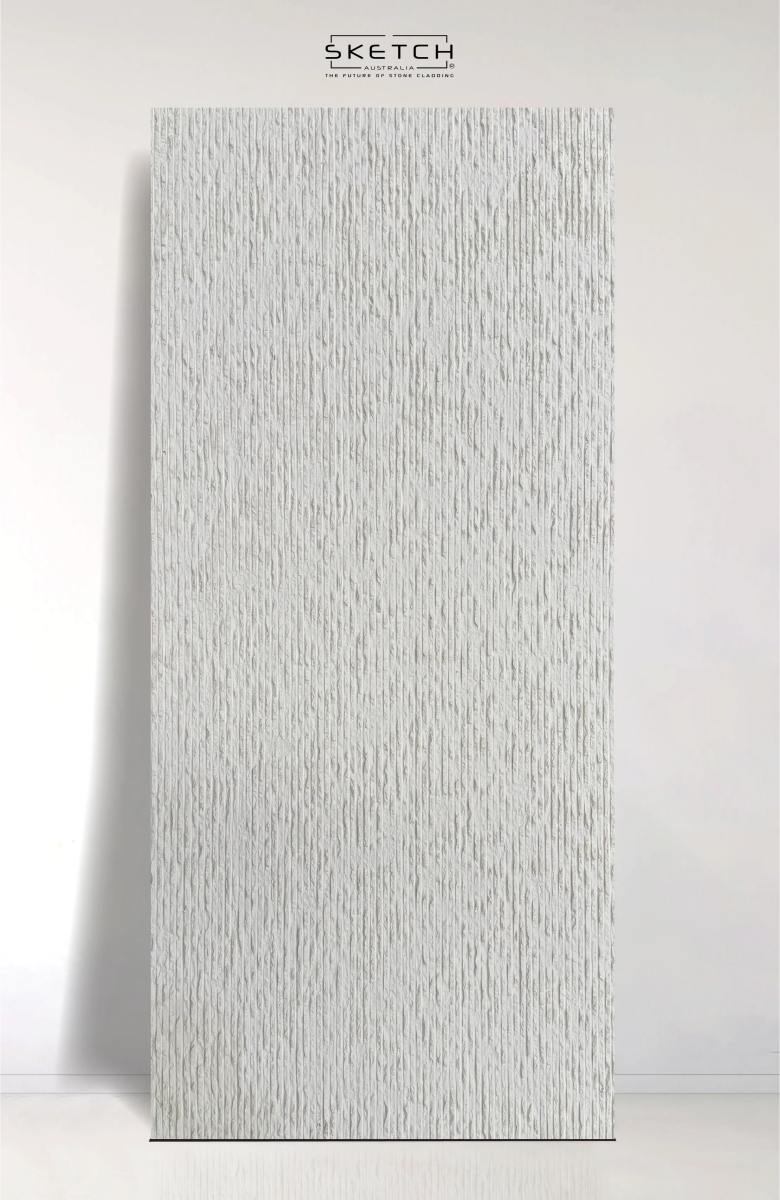
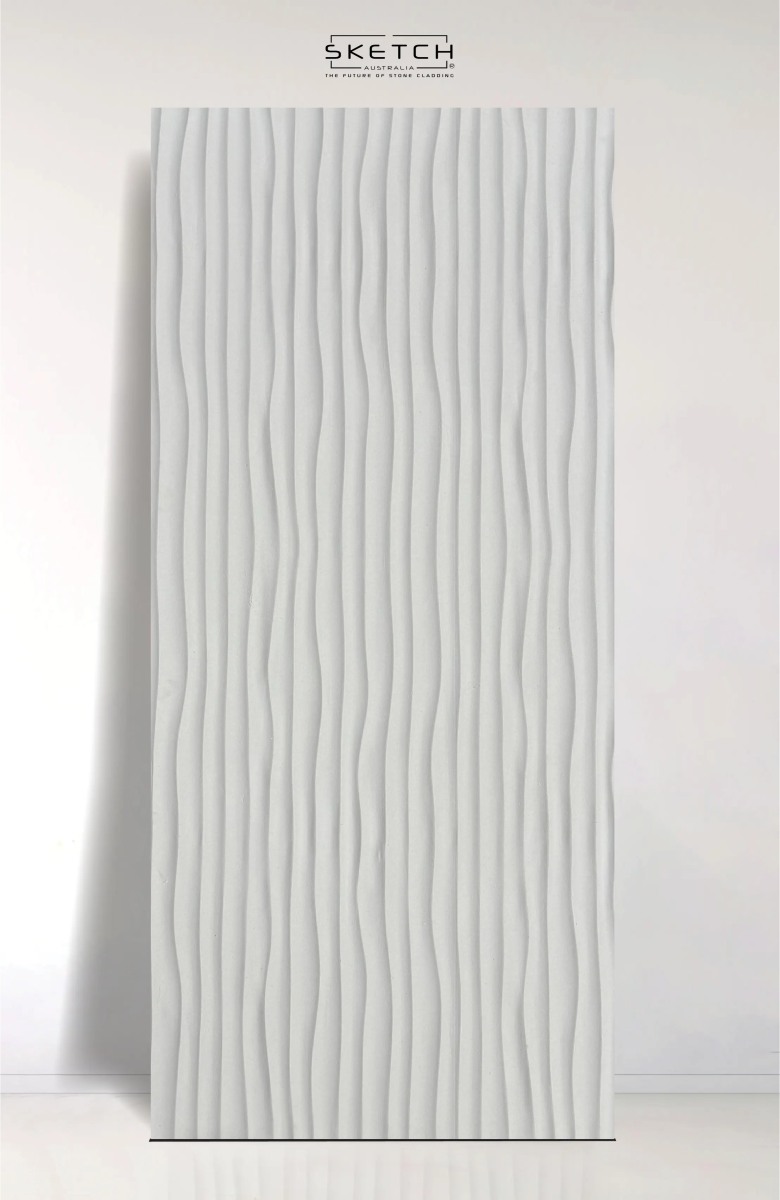
Flexible tiles are ultra-thin, bendable wall tiles on a flexible backing — thin enough to curve around walls, columns, arches and bulkheads where rigid tiles can’t go. Made from a modified clay material (MCM), they carry real surface texture at a fraction of the weight of ceramic or porcelain, cut with hand tools and fixed with standard adhesive. From $94 per panel, with Australia-wide delivery and showrooms in Melbourne (Cranbourne West) and Sydney (Minchinbury).
NCC Group 1 fire tested — independently tested in Australia to AS 5637.1-2015, the highest Group Number classification for internal wall and ceiling linings. See the test data.
Where flexible tiles work best
Curved feature walls and columns, bathroom and ensuite walls, fireplace surrounds, exterior facades, retail and hospitality fit-outs — and renovating over existing tiles without demolition. Want the full story? See the flexible tiles guide, or explore our natural stone veneer range if you want quarried stone.
Flexible tiles vs ordinary tiles
| Sketch flexible tiles | Ceramic/porcelain tiles | |
| Bends around curves | Yes | No |
| Weight | Ultra-light — approx. 4.5 kg/m² | 15–25 kg/m² |
| Cutting | Knife or hand tools | Wet saw |
| Panel size | Up to 2700 × 1200 mm — 3.24 m² in one sheet | Typically 300–1200 mm |
| Fire classification | NCC Group 1 | Non-combustible |
| Install over existing tiles | Yes | Rarely |
Flexible tile FAQs
What are flexible tiles?
Ultra-thin panels made from a modified clay material on a flexible backing, so they bend around curves that rigid tiles can’t follow — with a genuine textured surface, not a flat vinyl sheet.
Are flexible tiles natural stone?
No. They are a modified clay material with a stone-look surface. If you want quarried stone, our natural stone veneer range is real stone — over 50 types across slate, marble and sandstone.
Are they fire rated?
Yes. The range is classified NCC Group 1 under AS 5637.1-2015 for internal wall and ceiling linings — the highest of the four groups. Full test report available on request.
Can flexible tiles be used in bathrooms?
Yes, on walls. Sealed with a penetrating sealer they suit bathroom and ensuite walls, bath and hob cladding and niches. They are not suitable for floors, shower trays or shower bases.
Can I lay flexible tiles over existing tiles?
Yes — with the right adhesive and a sound, flat, clean substrate, which is what makes them a fast renovation option with no demolition.
How are the sheets joined?
Butt-joined tight for a seamless look, or laid with a gap and grouted like conventional tile. We recommend a grouted gap to allow for movement.