

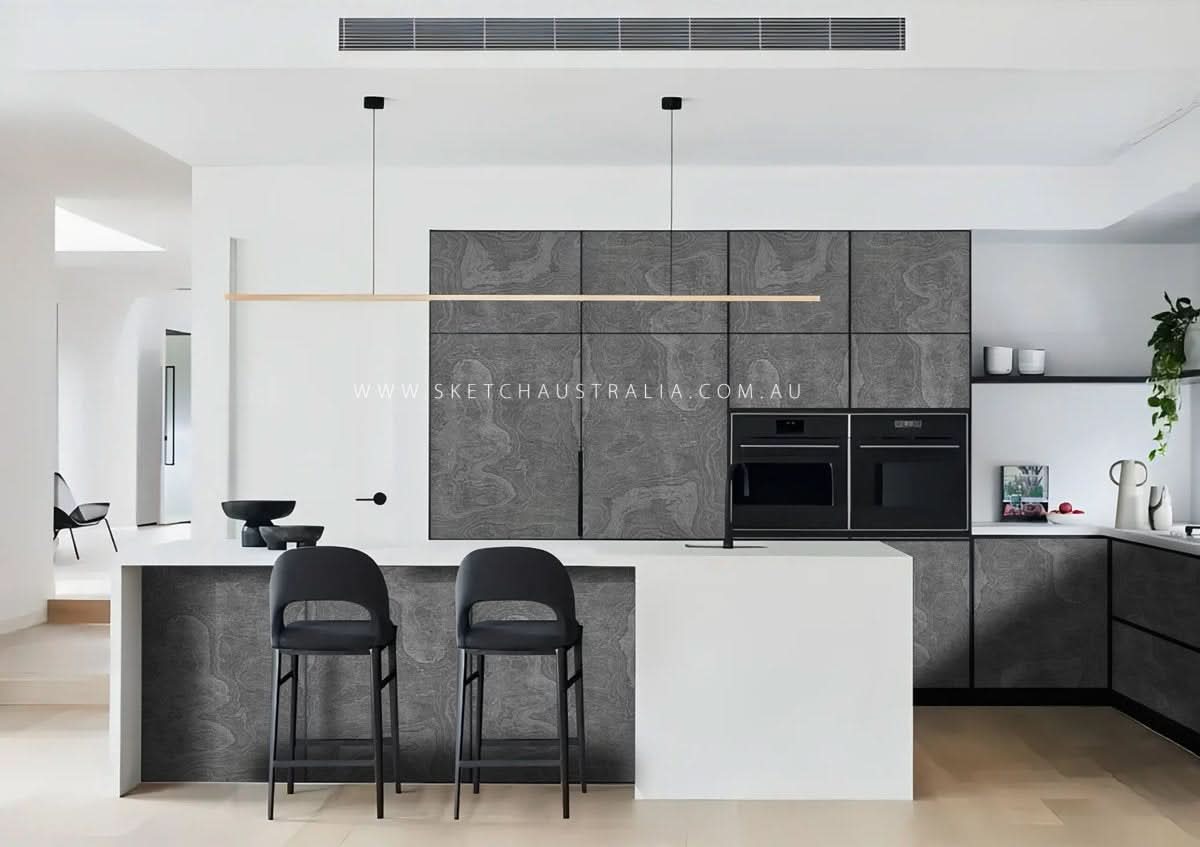

Two of the most popular stone wall panel choices for Australian homes are sandstone and slate. Both are natural stones. Both are available as thin veneer panels that can be applied to standard interior and exterior walls. But they look completely different, behave differently, and suit different spaces. If you're trying to choose between them, this guide will help you make the right call.
The Look: What's the Visual Difference?
Sandstone
Sandstone has a warm, earthy quality that feels distinctly Australian. Its tones tend to run through buffs, honeys, cream, and terracotta — the colours of the Australian outback and the historic sandstone buildings of Sydney and Brisbane. The texture is typically smooth to gently granular, with a matte finish that absorbs light rather than reflecting it.
In a home, sandstone wall panels create warmth and a sense of organic, natural comfort. They pair naturally with timber, rattan, linen, and other natural materials. They're the choice for spaces that feel grounded, relaxed, and connected to the landscape.
Slate
Slate is cooler, more dramatic, and more directional. Its natural cleavage planes create a layered, stratified texture that has strong visual depth. Slate tones run from deep charcoal and dark grey through to rust-red, green-grey, and multicolour varieties. The surface has a matte sheen and the layers catch light at different angles, creating a constantly shifting appearance as the light changes through the day.
Slate wall panels suit contemporary, industrial, and moody interiors. They pair well with dark metals, polished concrete, and minimalist furnishings. They make a strong statement without trying too hard.
Durability: How Do They Compare?
Both sandstone and slate are natural stones that have been used in construction for centuries — so durability isn't really a question of one being weak. But they do have different characteristics worth understanding.
Sandstone
Sandstone is a sedimentary rock and is slightly more porous than slate. This means it benefits from sealing, particularly in exterior applications or areas that will be exposed to moisture. Unsealed sandstone can absorb water and, in high-exposure environments, may show staining over time. Properly sealed, it's a highly durable material that performs well outdoors in the Australian climate.
Slate
Slate is a metamorphic rock — it's been subjected to heat and pressure over millennia, making it denser and less porous than sandstone. It has natural water-resistant properties and is widely used in wet areas and exterior applications without sealing (though sealing is still recommended for best long-term performance). Slate is also slightly harder and more resistant to chipping and scratching than sandstone.
Winner for wet areas: Slate has a natural advantage in bathrooms and exterior walls exposed to heavy rain. Sandstone is perfectly suitable with sealing, but slate requires less maintenance.
Cost: Is One More Expensive?
In the Australian market, sandstone and slate wall panels are generally in a similar price bracket when comparing equivalent panel types. Thin stone veneer panels in both materials typically range from $80–$150 per square metre, depending on the specific product and finish. Premium or specialty cuts of either stone can cost more.
Sketch stocks a range of both sandstone and slate panels at various price points. We recommend requesting samples and comparing like-for-like before making a purchasing decision based on price alone.
Best Uses: Where Does Each Shine?
Choose Sandstone If You Want:
- Warmth and organic earthiness in your space
- A natural material that feels distinctly Australian
- A relaxed, resort-style outdoor entertaining area
- A feature wall in a living room or bedroom with warm-toned furniture
- A material that pairs well with timber and natural fibres
Choose Slate If You Want:
- A dramatic, high-contrast feature wall
- A material that suits a contemporary or industrial interior
- A naturally water-resistant stone for bathrooms or exterior walls
- Depth and texture in a darker, moodier colour palette
- Flexibility for both interior and exterior applications with minimal maintenance
Can You Use Both?
Absolutely. Some of the most interesting interiors use two different stone types in the same space — sandstone on an exterior alfresco wall paired with slate in the adjacent indoor kitchen, for example. The contrast between the warm tones of sandstone and the cool drama of slate can be genuinely beautiful when handled thoughtfully.
The key is to establish a clear logic to the choices — stone type follows the function of the space, or it follows the colour palette, not both at once.
Order Samples and See for Yourself
The best way to choose between sandstone and slate is to order samples of both and hold them up in your space. Natural stone changes dramatically in different lighting conditions — what looks cool and grey in the showroom can look quite different under warm downlights in your living room. Sketch makes sampling easy. Browse our range and order your samples online today.