

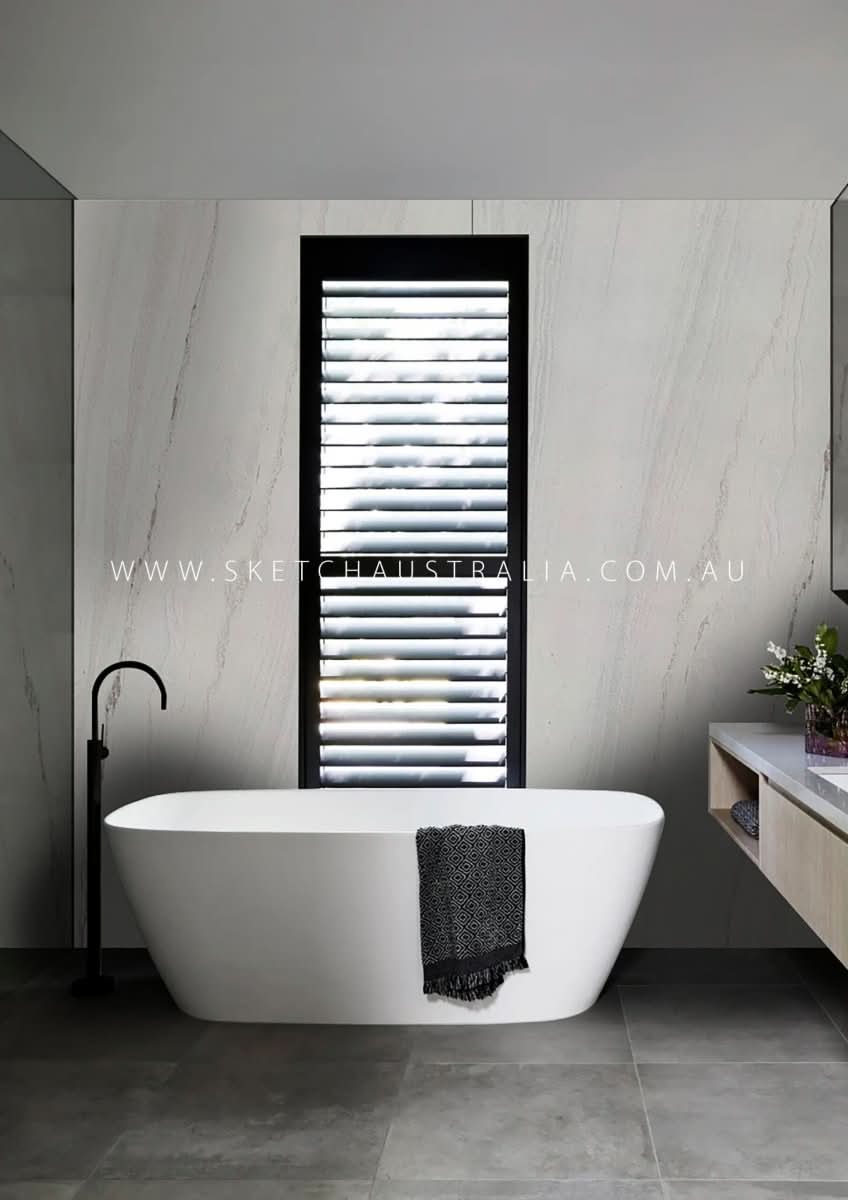

Every bathroom renovation comes down to the same question at some point: tiles or panels? Both can look great. Both have their place. But there are real, practical differences that affect how easy your bathroom is to live with, how long it looks good, and how much maintenance you will be doing ten years from now.
We have helped thousands of Australian homeowners and builders choose bathroom wall materials. Here is what we have learned from watching these products perform in real Australian conditions.
Why Grout is the Biggest Problem With Tiled Bathrooms
Nobody tells you this when you pick out beautiful bathroom tiles, but grout is the ongoing maintenance commitment that comes with them. In a shower that gets used every day in a humid Australian climate, grout absorbs moisture, discolours, and eventually grows mould no matter how well it was applied initially.
Regrouting a full bathroom typically costs $500 to $2,000 depending on the size, and most tiled bathrooms need it at least once every 10 to 15 years. In high-use bathrooms with hard water, sooner.
Wall panels eliminate grout lines completely. One of the most common pieces of feedback we get from customers who switch to stone veneer or carbon crystal boards is how much easier their bathroom is to keep clean.
How Wall Panels Handle Moisture
The waterproofing question is the one that stops most people from committing to wall panels in wet areas. The honest answer is: it depends on the product and how it is installed.
Carbon Crystal Boards
Carbon crystal boards are fully waterproof and can be used in direct contact with water, including in showers. They do not absorb moisture and will not warp or delaminate in a wet environment. They are an excellent choice for shower walls and bath surrounds.
See our Marble Carbon Crystal Board range, which is particularly popular for shower walls.
Thin Natural Stone Veneer
Natural stone veneer is water resistant but not inherently waterproof. In a shower, you need to apply a penetrating stone sealer after installation and reseal every few years. Done correctly, stone veneer performs very well in wet areas.
The advantage of going through this step is that you get a surface that looks genuinely different from anything else in the market. Natural stone in a shower is a statement that synthetic panels cannot replicate.
Our installation guide covers the correct sealing process for wet area applications in detail.
Installation Time: Panels vs Tiles
A standard bathroom tiling job takes a skilled tiler two to four days for a medium-sized bathroom, including waterproofing membrane, adhesive, grouting, and cleaning. Most tilers charge between $45 and $80 per square metre in Australian capital cities for supply and install.
Wall panels — particularly thin stone veneer — can be installed significantly faster because you do not need to wait for adhesive to cure before grouting, and there is no grouting at all. A confident tradesperson can panel a medium bathroom in one to two days.
The Housing Industry Association of Australia notes that bathroom renovations are among the most common home improvement projects in the country. Reducing installation time is one of the practical advantages panels have over tiles for renovation projects where the bathroom cannot be out of use for long.
Long-Term Appearance: What Holds Up Better
Tiles do not fade, warp, or deteriorate if the grout is maintained. A well-tiled bathroom can look good for 20 to 30 years. The limitation is that taste changes, and large-format tiles that were fashionable in 2015 can date a bathroom noticeably.
Natural stone veneer is timeless in a way that most synthetic materials are not. Stone does not go out of fashion because it does not look like a manufactured product. Slate feature walls, marble stone panels, and travertine accents have been used in premium bathrooms for decades because they age gracefully rather than dating.
Carbon crystal boards offer a high-gloss contemporary look that suits modern design but is more style-dependent than natural stone.
What Our Customers Say
We regularly hear from builders and homeowners who tried wall panels for the first time expecting a compromise and were surprised by the result. One of the most common comments is about how different the stone looks in person versus online. The texture, the variation between sheets, the way it picks up light — these are things photos do not capture well.
If you are not ready to commit, order a sample pack and put it next to your bathroom tiles, vanity, and fixtures before you decide. It costs very little and removes all the guesswork.
The Bottom Line
Tiles are a proven, durable option that make sense for many bathrooms. If you have a tight budget, an existing tiler you trust, and a design that calls for a specific tile look, tiles are fine.
But if you want a bathroom that is easier to maintain, looks more considered, and uses materials that age gracefully rather than dating, wall panels — particularly natural stone veneer and carbon crystal boards — are worth the extra thought at the planning stage.
Browse the full range of bathroom-suitable wall panels at Sketch Australia. We are also happy to advise on the right product for your specific bathroom layout.
|
Author Written by the Sketch Australia product team. Our technical recommendations are based on direct supply experience across thousands of Australian bathroom renovation projects, including independent waterproofing and fire rating tests available on our website. |